Personal Branding on LinkedIn: A 7 Step Framework
The 7 step framework behind a personal brand that brings clients to you, from positioning to consistency.

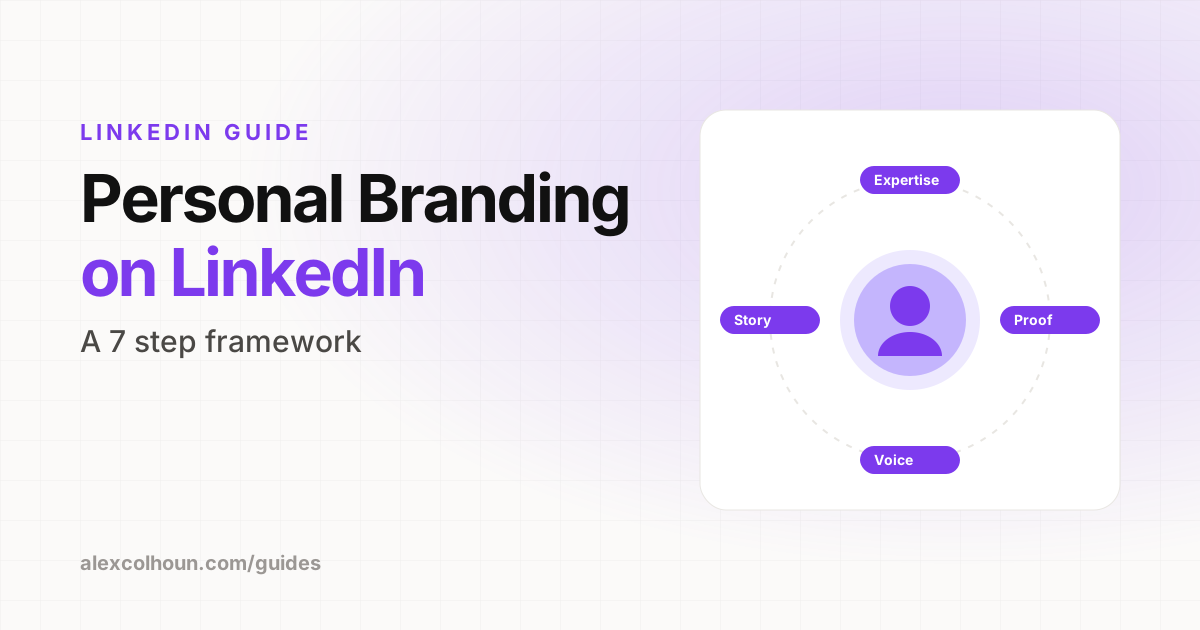
Building a personal brand on LinkedIn means becoming known for one specific thing by the people you want to work with. Choose your positioning (who you help and with what), make your profile say it clearly, post consistently on three or four related topics, show proof and personality, and engage with your niche every day. A strong personal brand is built on consistency over months, not on one viral post.
"Personal brand" sounds fluffy, but on LinkedIn it is very practical: it is what people think of when they see your name. For founders, coaches and consultants, a strong personal brand means clients come to you already knowing what you do and already trusting you.
My own personal brand on LinkedIn grew to 46K followers and 5.8M+ impressions, and it is the reason I run a six-figure business without paid ads. Here is the framework I use and teach.
What a personal brand on LinkedIn actually is
Your personal brand is the answer to three questions people ask (often unconsciously) when they see you:
- What is this person about? Your topic and expertise.
- Can I trust them? Your proof, consistency and how you treat people.
- Do I like them? Your personality, values and story.
A strong personal brand answers all three clearly and consistently, everywhere people meet you on LinkedIn.
Step 1: Choose your positioning
Positioning is the foundation. Without it, you are just "a person who posts".
I help [specific audience] [achieve specific result] through [your method or expertise].
- Narrow beats broad. "Leadership coach for first-time managers in tech" is memorable. "Coach" is not.
- Pick something you can talk about for years. Your brand compounds when your topic stays stable.
- Align it with how you make money. A personal brand that does not connect to your offer is a hobby.
Step 2: Make your profile tell the story
Your profile is your brand's home page. Everything should reinforce your positioning:
- Photo: a clear, well-lit, friendly headshot that looks like you today.
- Banner: your positioning and one proof point. See LinkedIn banner ideas.
- Headline: who you help and the result. See headline examples.
- About: problem, method, proof and next step. See About section examples.
- Featured: lead magnet, proof and offer. See the Featured section guide.
Step 3: Pick three or four content pillars
Content pillars are the topics you want to be known for. They should sit close to your positioning. For example, a LinkedIn coach might use content, DMs and client acquisition, profiles, and personal stories. Posting consistently within your pillars is what makes your brand recognizable. The full process is in LinkedIn content strategy.
Step 4: Balance expertise, proof and personality
| Content type | What it builds | Examples |
|---|---|---|
| Expertise | Authority | Frameworks, how-tos, checklists, opinions on your industry |
| Proof | Trust | Client results, case studies, behind the scenes of your work |
| Personality | Likeability | Your story, lessons, failures, values, life outside work |
Most professionals only post expertise and wonder why nobody feels connected to them. A little personality goes a long way. People buy from people.
Step 5: Develop a recognizable voice
- Write like you talk. If it sounds like a press release, rewrite it.
- Have opinions. Neutral content is forgettable. Take clear positions on things in your industry.
- Use a consistent format and visual style. Same colors on carousels, a similar post structure, a recurring series.
- Repeat your core ideas. What feels repetitive to you is new to most of your audience.
Step 6: Show up in your niche
A personal brand is not built only on your own posts. It is built in other people's comment sections, DMs and events. Spend time every day commenting thoughtfully on posts from people in your niche, replying to every comment you get and starting conversations. See the LinkedIn commenting strategy guide.
Step 7: Stay consistent for months
Personal brands compound. The first months are slow, and that is normal. Posting three to five times a week for six to twelve months is what makes people say "oh, you are the [topic] person". Most people quit right before it starts working.
How to know your personal brand is working
- People mention your content when they meet you or message you.
- Inbound messages and referrals start arriving without outreach.
- Prospects on sales calls say "I have been following you for a while".
- You get invited onto podcasts, panels or collaborations.
- Profile views and followers grow steadily month over month.
Personal branding mistakes
- Trying to appeal to everyone.
- Copying another creator's style instead of finding your own.
- Only posting wins and never anything real.
- A profile that says one thing and content that says another.
- Chasing virality with topics that have nothing to do with your offer.
From personal brand to clients
A personal brand creates attention and trust. Turning that into revenue takes a system: a profile that converts, conversations and calls. That is what I break down in how to get clients on LinkedIn.
If you want to build your personal brand with a community of people doing the same, join The Growth Innovator on Skool. It is free.
Frequently Asked Questions
How do I build a personal brand on LinkedIn?
Choose clear positioning, make your profile reflect it, post consistently on three or four related topics, mix expertise, proof and personality, and engage with your niche every day.
How long does it take to build a personal brand on LinkedIn?
Expect months, not weeks. Posting three to five times a week for six to twelve months is usually when people start recognizing you for your topic.
What should I post to build a personal brand?
A mix of expertise (frameworks and how-tos), proof (results and case studies) and personality (stories, lessons and values).
Do I need a niche for a personal brand on LinkedIn?
Yes. A specific audience and topic make you memorable. Broad positioning makes you easy to forget.