LinkedIn for Coaches: How to Get Coaching Clients
The playbook coaches use to fill their calendar from LinkedIn: niche, profile, content, conversations and trust.

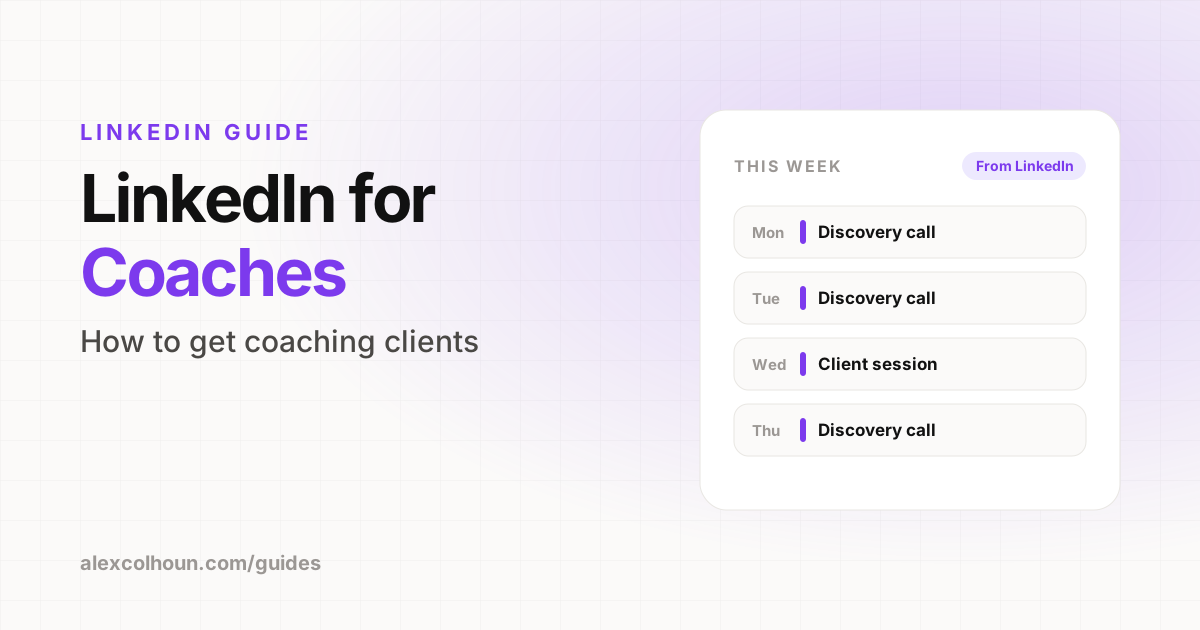
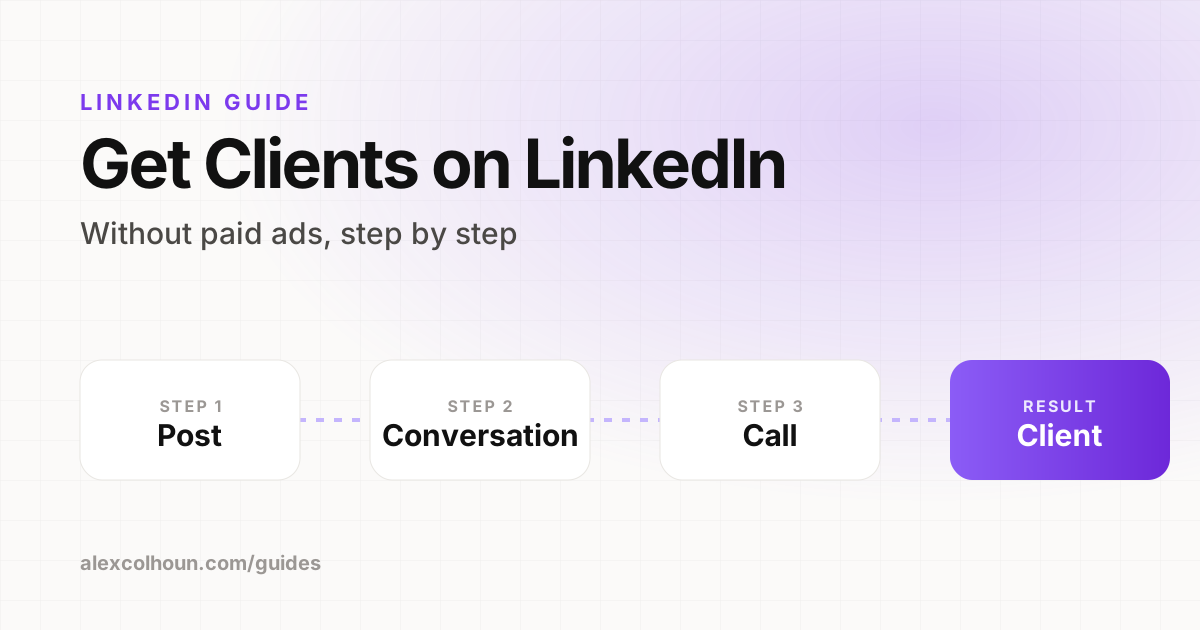
Coaches get clients on LinkedIn by niching down, turning their profile into a landing page for one coaching offer, posting content that shows how they think (frameworks, client stories, lessons) three to five times a week, and starting real conversations with the people who engage. Coaching is a trust purchase, so the coaches who win on LinkedIn are the ones prospects feel they already know before the first call.
LinkedIn is one of the best platforms for coaches: executive, leadership, career, business and sales coaches all have their buyers there, with job titles and companies visible. But it is also crowded with coaches posting generic motivation and sending pitch-slapping DMs.
Many of the founders I coach and the members of my community are coaches. This is the playbook that works for them.
Why LinkedIn works for coaches
- Your buyers are there, often with budgets: leaders, managers, founders and professionals investing in themselves.
- Long-form trust building: posts, newsletters and Lives let prospects get to know you over weeks.
- Visible proof: client stories and recommendations live right on your profile.
- Direct access: you can start a conversation with anyone who engages.
Step 1: Niche down further than feels comfortable
"Life coach" and "business coach" are categories, not positioning. Buyers hire the coach who seems made for them.
| Too broad | Specific |
|---|---|
| Leadership coach | Coach for first-time managers in tech |
| Business coach | Coach for agency owners stuck at $30K a month |
| Career coach | Career coach for engineers moving into product |
| Executive coach | Executive coach for newly promoted VPs of Sales |
A specific niche makes your content sharper, your profile clearer and your referrals easier.
Step 2: Build a profile that sells coaching
- Headline: who you coach and the transformation. "I help first-time tech managers lead with confidence in 90 days".
- Banner: your transformation and one proof point.
- About: your client's struggle, why it happens, your method, results and a next step.
- Featured: a free resource, a client story and a way to book a call.
- Recommendations: ask past clients for specific recommendations. Social proof matters more for coaching than almost any other service.
Use the headline examples, About section examples and Featured section guide.
Step 3: Post content that shows how you coach
Prospects are asking one question: "Can this person help someone like me?" Answer it with content:
| Post type | Example for a leadership coach |
|---|---|
| Framework | The 3 question 1:1 agenda I give every new manager |
| Client story (with permission) | How a client went from dreading feedback to giving it weekly |
| Common mistake | Why new managers stop delegating, and how to fix it |
| Your story | The first time I managed someone older than me |
| Opinion | Most leadership training fails because it happens before people need it |
| Behind the scenes | What actually happens in a coaching session |
Avoid generic motivation. "Believe in yourself" content gets likes from other coaches, not clients.
Sharing client stories without breaking confidentiality
- Always ask permission before sharing anything identifiable.
- Anonymize details: role and situation rather than names and companies.
- Focus on the lesson or shift, not private details.
- Ask happy clients for a LinkedIn recommendation or a testimonial you can share publicly.
Step 4: Turn engagement into discovery calls
- Notice who engages: comments, profile views, new followers in your niche.
- Send a short, personal message about them. No pitch.
- Ask about their situation and what they are working on.
- If coaching could help, offer a short discovery call.
Templates are in LinkedIn DMs that book calls.
Step 5: Add trust accelerators
- LinkedIn Lives: run a free monthly workshop or live coaching session. See how to go live on LinkedIn.
- A newsletter: stay in front of prospects who are not ready yet. See how to start a LinkedIn newsletter.
- A free resource: a self-assessment, workbook or template related to your niche.
A weekly LinkedIn plan for coaches
| Day | Action |
|---|---|
| Monday | Framework post |
| Tuesday | Story or lesson post |
| Wednesday | Carousel or checklist |
| Thursday | Client result or proof post |
| Every day | 20 to 30 minutes commenting, replying and starting conversations |
Mistakes coaches make on LinkedIn
- Being a coach for everyone.
- Posting motivational quotes instead of showing expertise.
- Pitching coaching packages in connection requests.
- Never sharing proof or client outcomes.
- Hiding the offer, so interested people do not know how to work with you.
The full system for any service business is in how to get clients on LinkedIn. If you are a coach and want us to build your LinkedIn client acquisition system with you, that is exactly what 1:1 coaching is for.
Frequently Asked Questions
Is LinkedIn good for coaches?
Yes. Leaders, managers, founders and professionals who invest in coaching are active on LinkedIn, and it rewards the long-form trust building coaching requires.
How do coaches get clients on LinkedIn?
By niching down, building a profile that clearly sells one coaching offer, posting content that shows how they coach and starting conversations with people who engage.
What should a coach post on LinkedIn?
Frameworks, anonymized client stories, common mistakes, personal stories and clear opinions. Avoid generic motivational quotes.
How can coaches share client results without breaking confidentiality?
Ask permission, anonymize details and focus on the shift or lesson rather than private information.