LinkedIn Ghostwriting: How It Works and Who It's For
What a LinkedIn ghostwriter does, when it is worth it, how to choose one and how to keep it sounding like you.

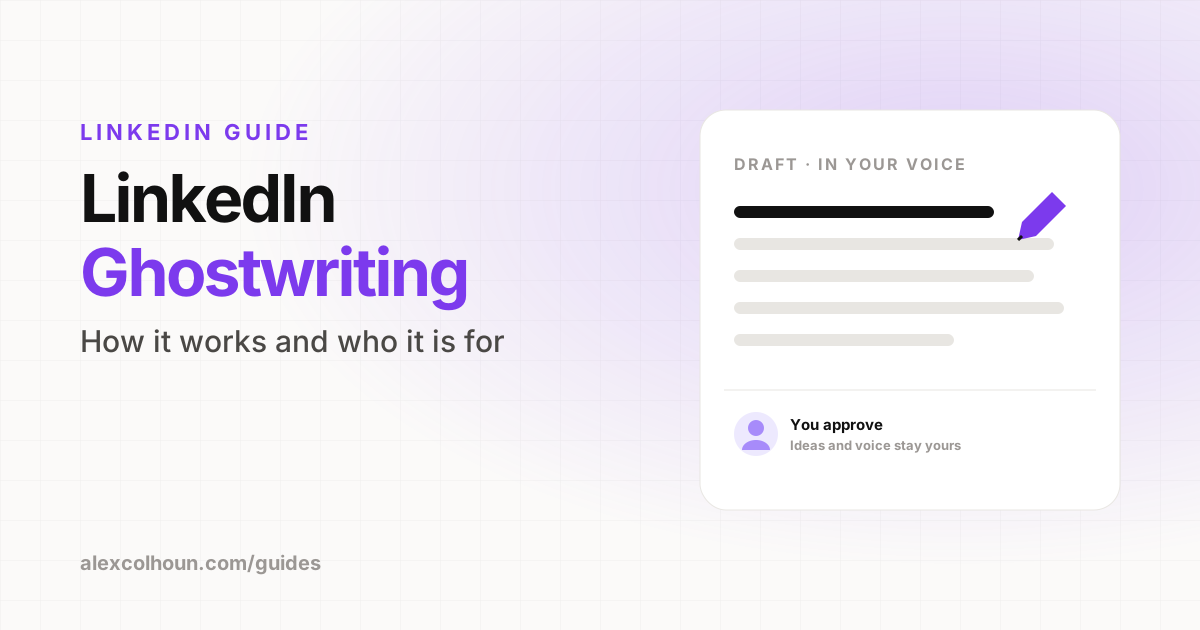
A LinkedIn ghostwriter writes posts (and sometimes newsletters, carousels and comments) in your voice, published under your name. It works best for busy founders and executives who have expertise and opinions but not the time to write. A good ghostwriter interviews you, captures your voice and ideas, and turns them into content you approve before it goes out. The ideas, stories and engagement still need to come from you.
Ghostwriting on LinkedIn is common, especially for founders and executives. Done well, it is not fake: the thinking is yours, the writer just turns it into clear posts consistently. Done badly, it produces generic content that sounds like everyone else and builds nothing.
Here is how LinkedIn ghostwriting works, when it makes sense, how to choose a ghostwriter and how to make it sound like you.
What a LinkedIn ghostwriter does
- Strategy: positioning, content pillars and a posting plan.
- Interviews: regular calls or voice notes to pull out your ideas, stories and opinions.
- Writing: drafting posts, carousels and sometimes newsletters in your voice.
- Editing and approval: you review everything before it is published.
- Publishing and reporting: some services also schedule posts and report on results.
Some services go further and handle outreach, newsletters and analytics. That is closer to a full done-for-you LinkedIn service than pure ghostwriting.
Is it OK to use a ghostwriter on LinkedIn?
Yes, as long as the ideas and opinions are genuinely yours and you approve what goes out. Executives have used speechwriters and communications teams for decades. Where it goes wrong is when the content says things you do not believe, or when someone else replies to comments pretending to be you. Keep the thinking and the conversations yours.
When ghostwriting makes sense
- You have real expertise and opinions, but writing takes you hours.
- You have tried posting and cannot stay consistent.
- Your time is worth more spent on clients, sales or running the company.
- LinkedIn is (or should be) a meaningful source of clients, hires or partnerships.
When it does not make sense
- You do not yet know your positioning or who you are trying to reach.
- You will not make time for interviews and approvals.
- You will not engage with comments and DMs yourself.
- You enjoy writing and have the time. Then just write.
How to choose a LinkedIn ghostwriter
| Look for | Why it matters |
|---|---|
| Results on their own or clients' profiles | Proof they understand what works on LinkedIn |
| Experience in your industry or with your audience | Less time explaining, better ideas |
| A clear process for capturing your voice | The difference between you and generic content |
| Strategy, not just writing | Posts should connect to your offer and goals |
| Clear approval workflow | Nothing goes out without your sign-off |
| Reporting tied to business outcomes | Profile views, followers and leads, not just impressions |
Ask for writing samples, ask how they would position you and ask to speak to a current client.
How much does LinkedIn ghostwriting cost?
Pricing varies widely depending on experience, how many posts a month, whether strategy, carousels, newsletters and publishing are included, and whether outreach is part of the service. Freelancers, specialist ghostwriters and full-service agencies all price very differently. Compare on scope and results, not just price per post. A cheaper writer who produces generic content costs more in the long run than one whose content brings in clients.
How to make ghostwritten posts sound like you
- Record voice notes. Talk through ideas, opinions and stories. Your spoken words are your voice.
- Share your past writing: emails, posts and documents you wrote yourself.
- Give feedback early and specifically: "I would never say 'game-changer'" is gold for a writer.
- Keep a list of your opinions and stories the writer can draw from.
- Edit the first few weeks heavily. It gets faster as the writer learns you.
What you still need to do yourself
- Approve every post.
- Reply to comments, at least on your own posts.
- Handle DMs and sales conversations.
- Show up for interviews regularly.
Engagement is where relationships are built. Outsourcing it entirely breaks the trust your content creates.
Alternatives to hiring a ghostwriter
- Write with templates: see how to write LinkedIn posts and LinkedIn post ideas.
- Batch once a week: one focused session can produce a week of posts.
- Talk, then edit: record yourself and turn transcripts into posts.
- Get coached: learn the system once and run it yourself.
Ghostwriting mistakes
- Hiring a writer before you know your positioning.
- Approving posts without reading them.
- Letting someone else handle all comments and DMs.
- Measuring only impressions.
- Expecting results without your ideas and stories.
If you would rather learn to run your own LinkedIn system, with a clear content process that takes a few hours a week, that is what we build together in 1:1 coaching.
Frequently Asked Questions
What does a LinkedIn ghostwriter do?
They write posts, and sometimes carousels and newsletters, in your voice from interviews and voice notes, and you approve everything before it is published under your name.
Is it OK to use a ghostwriter on LinkedIn?
Yes, as long as the ideas and opinions are yours, you approve every post and you handle your own comments and conversations.
How much does a LinkedIn ghostwriter cost?
It varies widely by experience, volume and scope, such as strategy, carousels, newsletters and publishing. Compare on scope and results, not price per post.
How do I make ghostwritten posts sound like me?
Share voice notes and past writing, give specific feedback early, keep a list of your opinions and stories and edit heavily for the first few weeks.