The Best Time to Post on LinkedIn (And How to Find Yours)
Sensible default posting times, plus a simple test to find the best time for your own audience.

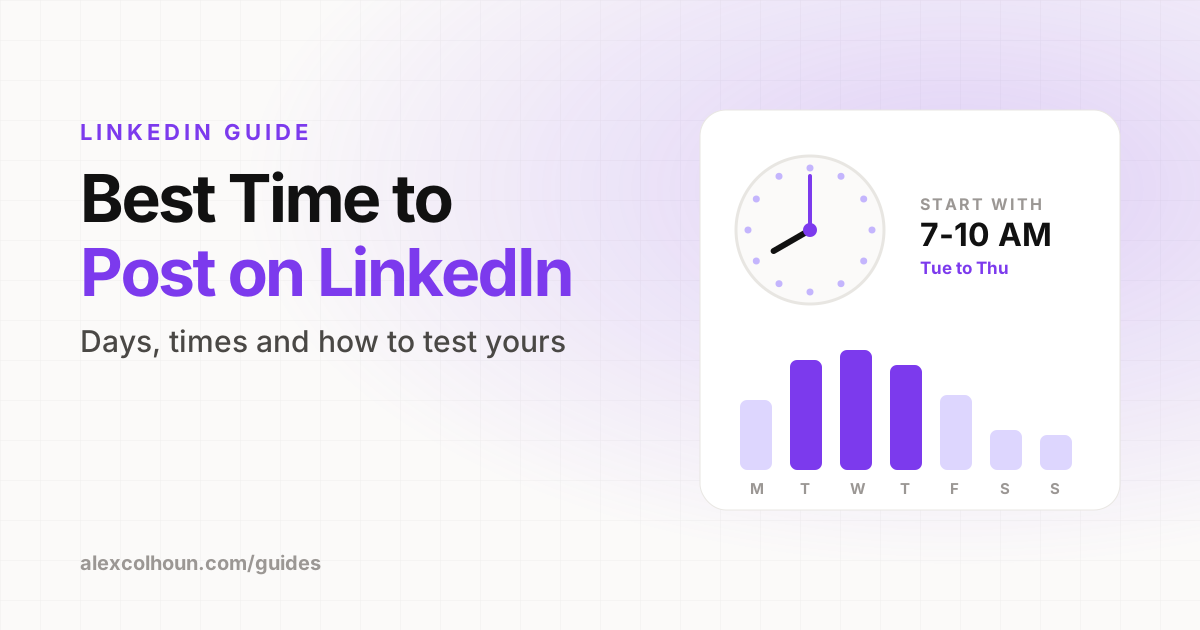
For most B2B audiences, weekday mornings in your audience's time zone, roughly 7 to 10 AM from Tuesday to Thursday, are a reliable starting point for posting on LinkedIn. But the best time for you depends on when your specific audience is online. Start with weekday mornings, post at a consistent time for a few weeks, then use your own analytics to adjust.
"When should I post?" is one of the most common LinkedIn questions I get. The honest answer: timing matters less than the post itself. A great post at an average time beats an average post at the perfect time.
That said, timing does help, especially in the first hour when early engagement shapes how far a post travels. Here is how to find your best time instead of guessing.
The general best times to post on LinkedIn
LinkedIn is a work network, so activity follows the working day. These are sensible defaults for a business audience:
| When | Why it tends to work |
|---|---|
| Weekday mornings (7 to 10 AM) | People check LinkedIn before and at the start of work |
| Lunchtime (12 to 1 PM) | A second scroll during breaks |
| Tuesday to Thursday | Mid-week is usually the most active stretch |
| Weekends | Less competition, but also fewer people online. Worth testing for some audiences |
Always use your audience's time zone, not yours. If most of your buyers are on the US East Coast, 8 AM Eastern is what matters even if you live in Europe.
Why posting time matters
When you publish, LinkedIn shows your post to a small slice of your network first. If those people engage, it gets shown to more people. Posting when your audience is awake and scrolling gives the post a better start. Posting when they are asleep means that first test happens with fewer people.
How to find your own best time
- Check where your audience is. In your LinkedIn analytics, look at follower demographics for location and industry.
- Pick one default time based on the table above and your audience's time zone.
- Post at that time for two to three weeks so you have a baseline.
- Test one change at a time, such as moving one or two posts a week to lunchtime or a different day.
- Compare like for like. Look at impressions and engagement over several posts, not one. A single viral post skews everything.
- Keep the winner and test again every few months, because audiences change as you grow.
Best posting times by audience type
| Audience | Good starting point |
|---|---|
| Corporate and enterprise | Tuesday to Thursday, 7 to 9 AM |
| Founders and entrepreneurs | Early mornings and weekends can work well |
| Recruiters and job seekers | Weekday mornings, especially early in the week |
| Global audience | Pick the time zone where most of your buyers are |
These are starting points to test, not rules.
What to do in the first hour after posting
- Stay online and reply to comments as they come in.
- Ask a follow up question in your replies to keep the conversation going.
- Comment on a few posts from people in your niche so you are active while your post is being tested.
- Do not edit the post heavily in the first few minutes. Fix typos, but avoid rewriting.
How often should you post?
Three to five times a week is a strong target for most founders and consultants. Space posts out so each one has room, usually one per day at most. Consistency over months matters more than posting at the exact right minute. The full plan is in my LinkedIn content strategy guide.
Should you schedule LinkedIn posts?
Yes, if it helps you stay consistent. LinkedIn has a built-in scheduler, and tools such as Taplio and similar schedulers work too. The one catch: schedule for a time when you can be online for the first hour to reply to comments.
Timing mistakes
- Posting in your own time zone when your buyers are somewhere else.
- Changing your posting time every day, so you never learn what works.
- Judging a time slot from one post.
- Posting and disappearing instead of replying in the first hour.
- Obsessing over timing while the hook and content need work.
Timing helps. Content wins.
If your posts are not getting traction, fix the post before the timing. Start with how to write LinkedIn posts that get engagement and how the LinkedIn algorithm works.
Want a posting plan and weekly feedback? It is free inside The Growth Innovator community on Skool.
Frequently Asked Questions
What is the best time to post on LinkedIn?
For most B2B audiences, weekday mornings around 7 to 10 AM in your audience's time zone, Tuesday to Thursday, are a reliable starting point. Test from there using your own analytics.
What is the best day to post on LinkedIn?
Tuesday to Thursday are usually the most active days for business audiences, but weekends can work for founders and creators because there is less competition.
Does posting time matter on LinkedIn?
It helps because early engagement influences how far a post travels, but the quality of the post matters much more than the exact time.
Should I post on LinkedIn on weekends?
It is worth testing. Fewer people are online, but there is also less competition, and some audiences such as founders engage on weekends.
How often should I post on LinkedIn?
Three to five times a week is a strong target for most founders and consultants, usually no more than once a day.